Autonomous, unmanned ship to make transatlantic crossing
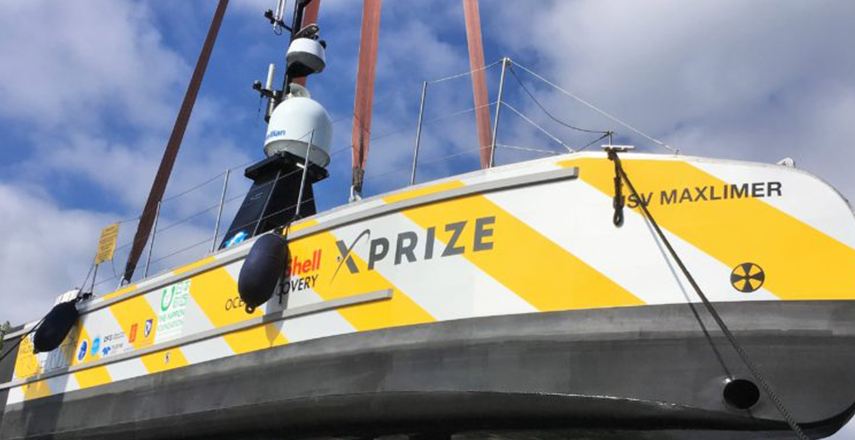
The USV Maxlimer, a ship with no crew and no pilot, is preparing to embark on a historic ocean voyage
The vessel will attempt the world’s first unmanned transatlantic crossing when it sets off from Canada early next year, bound for the south of England.
SEA-KIT International, the team behind the USV Maxlimer, recently won the $7 million Shell Ocean Discovery XPRIZE for their innovative unmanned surface vessel. It operates autonomously on the open seas by following GPS signals, and when it’s in a crowded port it can be controlled remotely.
The 12-metre autonomous ship has a range of 12,000 nautical miles and can endure more than 200 days at sea, meaning that it can carry out longer tasks without regard for a human crew. The ship can devote more space to equipment, and more time to research, mapping the sea bed and conducting repairs to off-shore rigs.
It’s also much more environmentally friendly than a manned vessel. Speaking to the Daily Beast, Neil Tinmouth, chief operating officer of SEA-KIT, said that their ship uses “less than five percent of the fuel required to operate a standard ocean-going vessel…This is a game-changer when it comes to the carbon footprint and environmental impact of these operations.”

Autonomous vehicles are making significant strides of late. Our roads are becoming increasingly compatible with driverless vehicles, enabled by the burgeoning 5G roll-out and growing popularity of electric vehicles. Many companies are also investing in the development and manufacture of driverless, flying taxis. The push for autonomy on land, in the air and at sea, is increasing in momentum, and innovations like SEA-KIT’s USV Maxlimer are breaking new ground and leading the charge.
This year, the ship has already conducted off-shore pipeline inspections and hauled cargo, giving the team the opportunity to test the vessel in different scenarios. With a 2 1/2 ton carrying capacity, an array of sensors and an onboard UAV drone submarine, the USV Maxlimer is a versatile ship with a host of potential applications.
In the future, autonomous unmanned surface vessels could play a pivotal role in oil-spill cleanups, vital repair works to off-shore rigs, sea-bed mapping and haulage of cargo in dangerous stretches of water.

